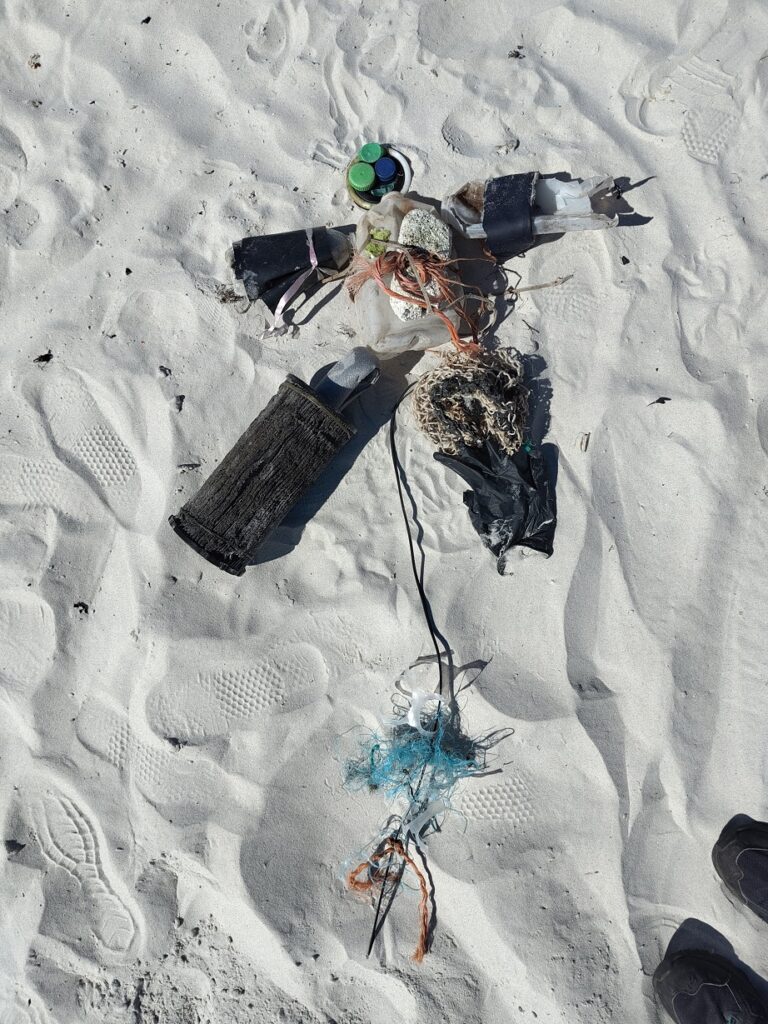
Thanks to some additional funding from the University of Glasgow’s Knowledge Exchange Fund, George and I are currently working with the GRAB Trust on a project related to their Beaches and Marine Litter Project. The project uses the well-known “Arrochar litter sink” as a focus and impetus for trying to encourage novel thinking and action in relation to the marine litter – particularly plastic objecst and debris – that washes up on Scotland’s shores. The project has two components:
- Co-production of creative expressions the persistent problem of beached marine litter.
- Creation of opportunities for interdisciplinary and interprofessional thinking that imagines new ways to remove marine litter and deal with it in ways that preserve or extract value.
In May and June, as part of the former strand, we’re running workshops with schools and community groups with the theme of Waste is a Monster (this theme was itself inspired by some of the work produced by students at NCLAN).
Along with GRAB’s project officers Jacqui and Kerry and primary school teachers, we’re taking children to their local foreshore/beach for a clean-up, then using some of the litter to inspire monster stories and make or draw the monsters that the stories feature.
We’ll keep updating this blog with examples of the outputs from these sessions as we go along.
Lochgoilhead
It was a beautiful day at Lochgoilhead and we spent about an hour on the foreshore. It isn’t as bad as Arrochar, but it is the head of a loch that feeds into Loch Long and so receives some of the same mix of rubbish coming from both out to sea and up the Clyde. At first glance, the shore didn’t look too bad, but in reality it was the by-now-familiar mix of plastic scraps – rope, sweetie wrappers, sanitary waste etc – embedded in a mass of seaweed.
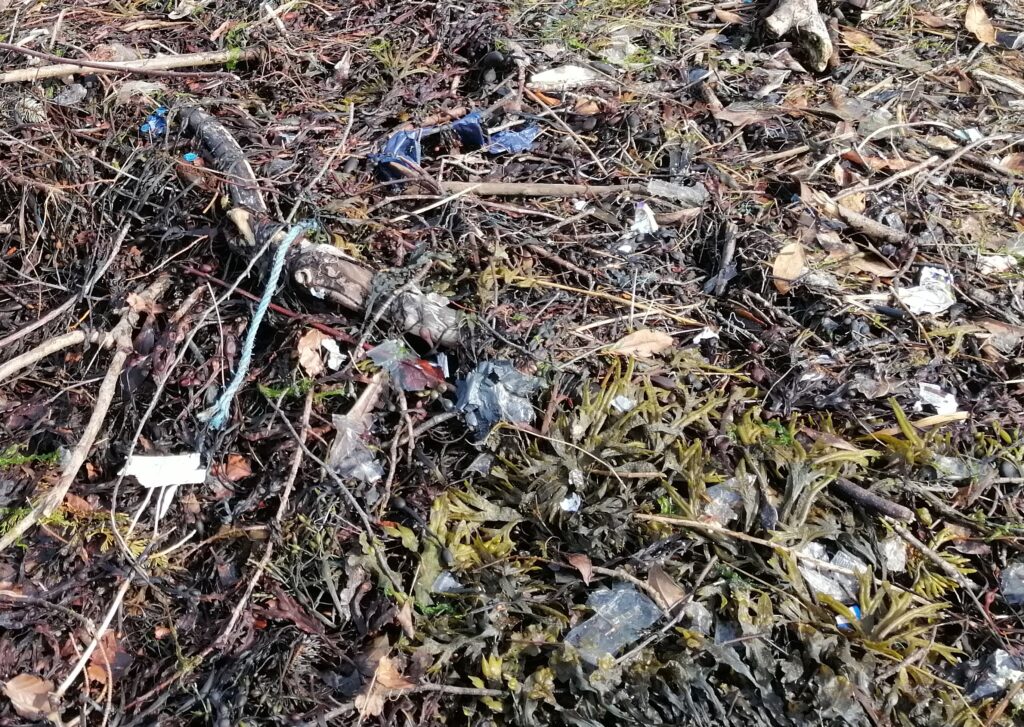
Despite the challenge of extracting the rubbish from this kind of mixture, with a couple of dozen pairs of small hands, close to the ground, we still managed to collect about 19.5 kg. As well as the usual litter pickers and plastic sacks, we took two buckets in which the children could deposit the bits of litter that they thought might be good for making monsters.
I got quite excited when I found a bit of plasti-rock but for some reason it didn’t make it into the monster buckets.
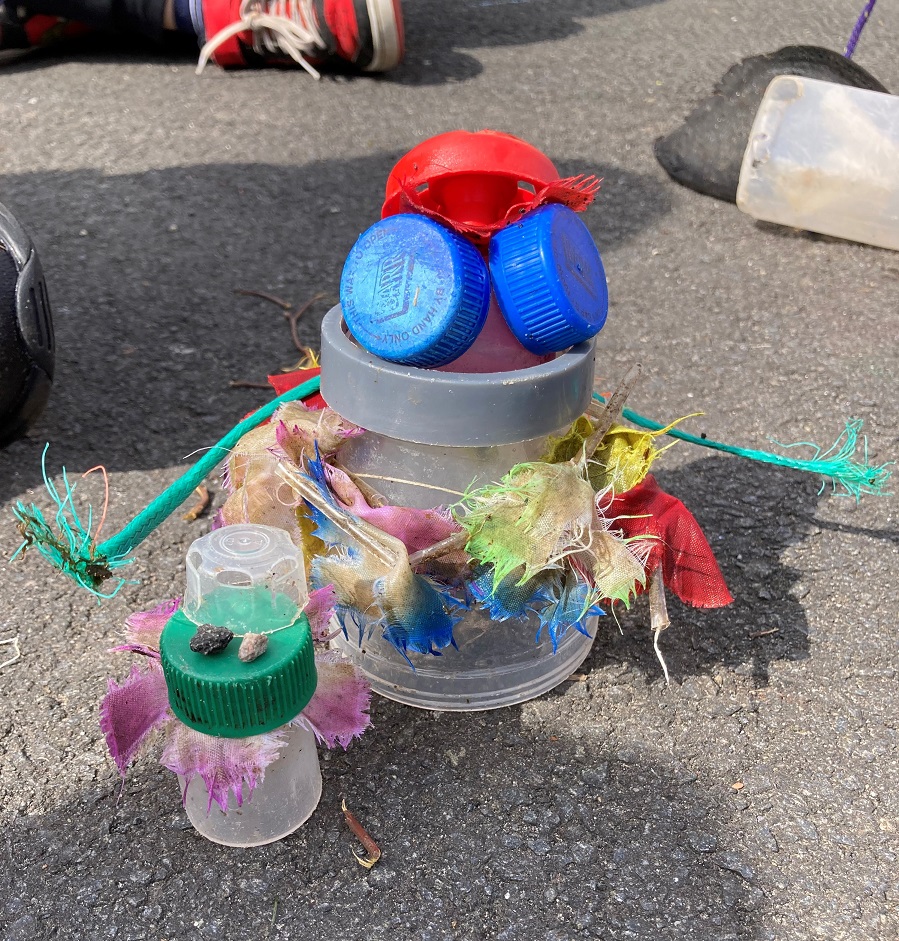
Back at the school, after a bit of a discussion about what makes a monster a monster, and a reading of our specially-written Stràilleach Golamas, the children got to work making their own monsters and monster stories. For some reason, most of the monsters were called Bob – here’s one of the Bobs, with his smaller monster friend Steve.
Gigha
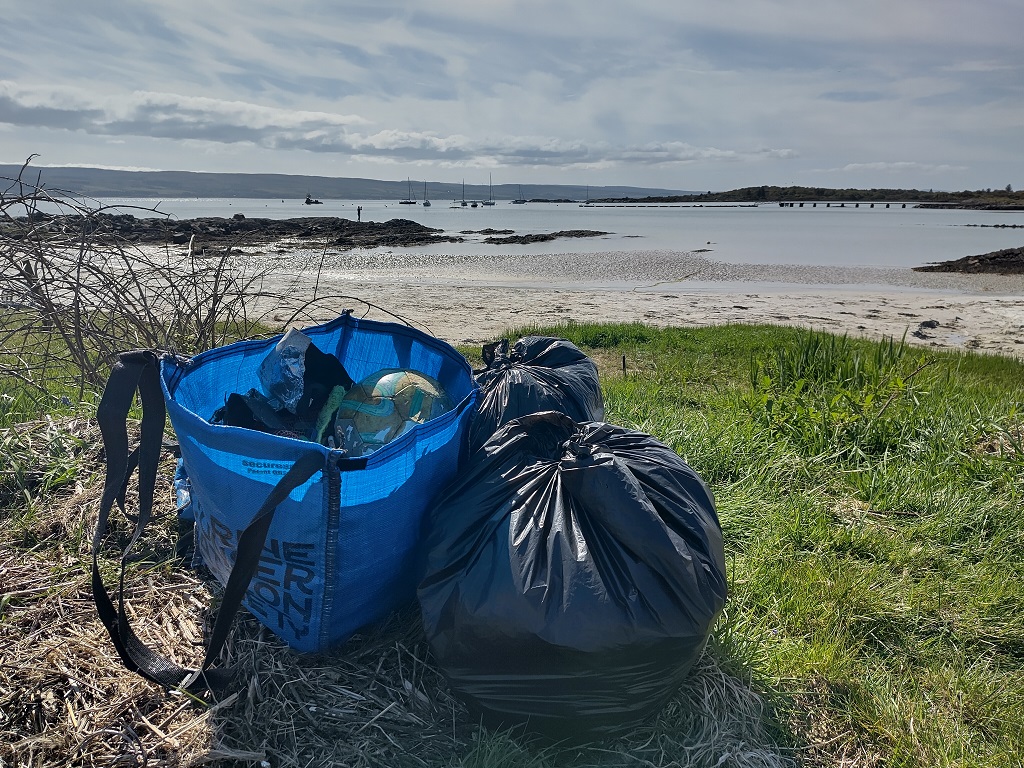
We spent a morning with the pupils of Gigha Primary School, cleaning the beach by the Boathouse and starting the process of making up monsters and stories. This beautiful, sheltered and generally clean beach turned out to have its own fair share of what some of the children called “impossible rubbish” – bits of rope, builder’s sacks or other kinds of plastic sheet so deeply buried in the sand, trapped under the anti-erosion rocks or overgrown by shoreline vegetation that pulling it out was impossible. However, in its usual fractal way, there turned out to be plenty of waste we could get at and we collected about 15 kg in just over an hour.
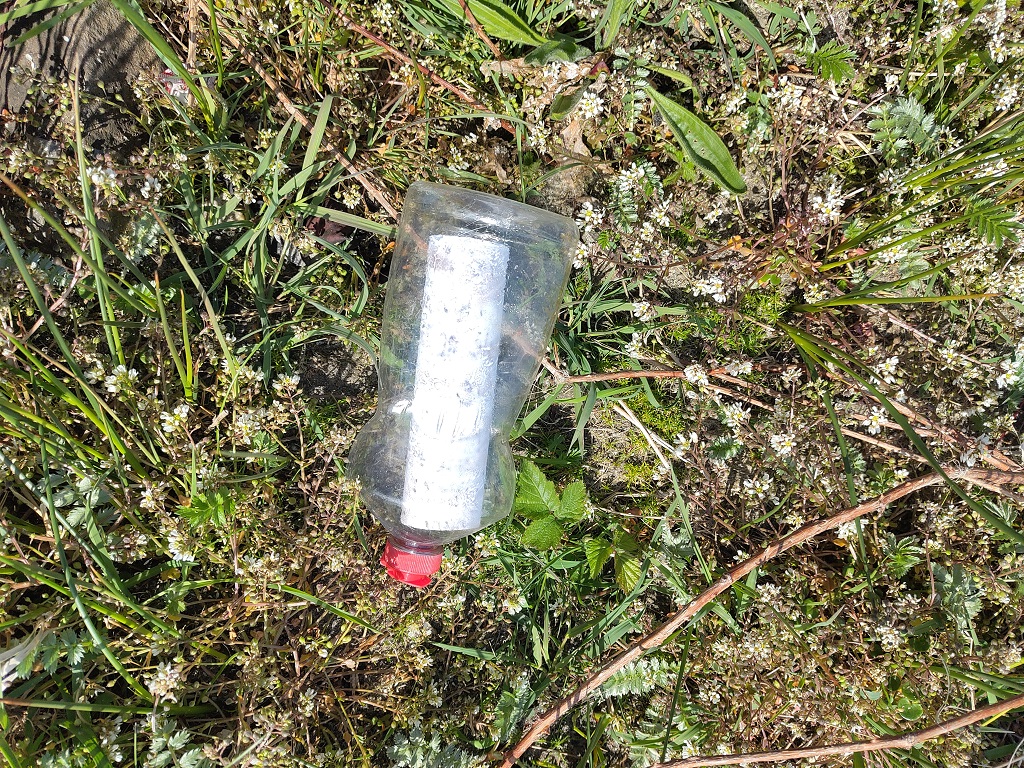
There was a flurry of excitement when George found a message in a bottle (a plastic washing-up liquid bottle). When the note inside was extracted, it turned out to have been written by two young girls from Gigha, put in the bottle and launched into the water somewhere between 15-18 years ago.
Some of the bits and pieces set aside for monster-construction included glasses, bottle tops, shotgun cartridges, the sliced off cuff of a wet suit, a balloon, a football … In the afternoon, the the children made a monster and their own story.